


Antigua and Barbuda Concludes Successful Green Climate Fund Mission, Advancing Climate Investment and Resilience Opportunities
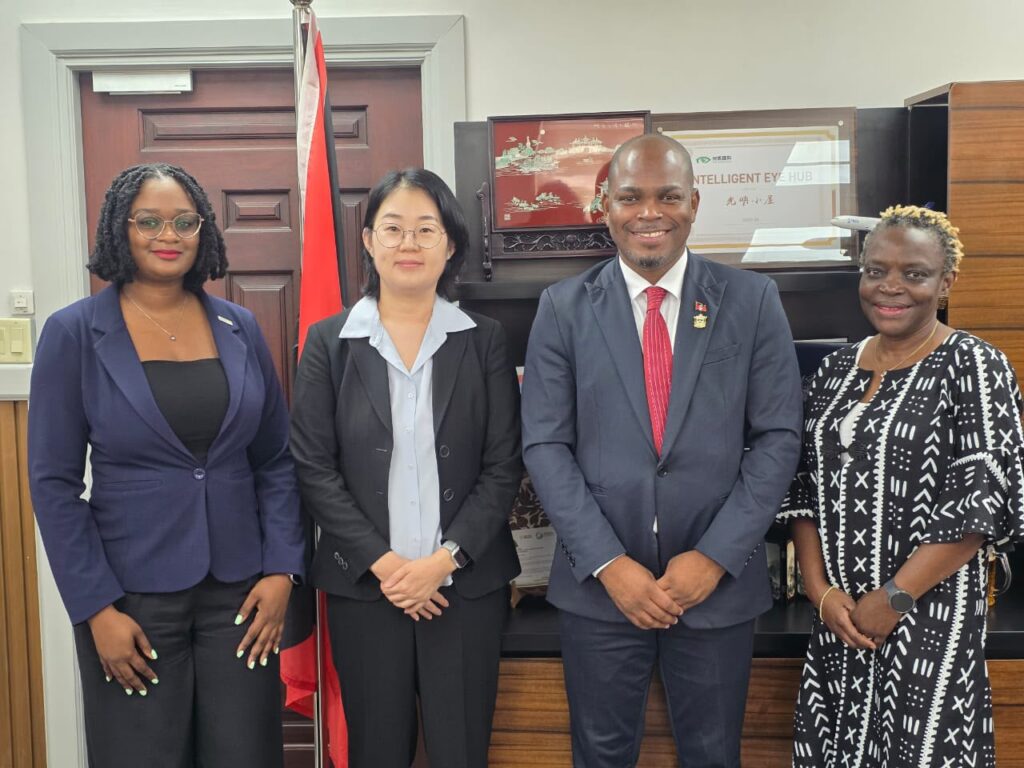
Antigua and Barbuda Concludes Successful Green Climate Fund Mission, Advancing Climate Investment and Resilience Opportunities St. John’s, Antigua and Barbuda – The Government of Antigua and Barbuda, through the Department of Environment and the Ministry of Finance, has concluded a five-day programming mission with the Green Climate Fund (GCF), held from 12–16 October 2026, aimed at strengthening cooperation, accelerating climate investments and identifying new opportunities to advance the country’s climate resilience agenda. The mission brought together representatives of the GCF, government ministries, implementing partners and regional stakeholders to review ongoing projects, strengthen institutional capacity and identify opportunities for future climate financing. Discussions highlighted several promising areas for future GCF investment, including climate-resilient housing and infrastructure, renewable energy, electric mobility, coastal protection and water security. Particular attention was given to strengthening national capacity to develop and implement projects that deliver tangible benefits to communities. Minister for Health, Wellness, Environment and Civil Service Affairs, the Honourable Michael Joseph, said the mission represents an important step in strengthening Antigua and Barbuda’s ability to attract climate financing and advance projects that respond to the country’s development needs. “Climate change presents significant challenges for small island developing states like Antigua and Barbuda, and access to climate financing is critical to building our resilience. Our engagement with the Green Climate Fund provides an opportunity to turn our national priorities into tangible investments that protect our communities, strengthen our infrastructure and safeguard our future.” The mission also provided an opportunity to advance solutions for accelerating implementation of existing GCF-funded projects, including the regional Enhanced Direct Access project involving Antigua and Barbuda, Dominica and Grenada, and the GCF BUILD project supporting climate-resilient infrastructure. Acting Director of the Department of Environment, Ambassador Ruleta Camacho-Thomas, welcomed the mission as an important step in strengthening the country’s partnership with the GCF. “This mission has provided a valuable opportunity to strengthen our engagement with the Green Climate Fund, identify practical solutions and position Antigua and Barbuda to access new climate financing opportunities. Our focus is on translating these partnerships into meaningful investments that strengthen our institutions, protect our communities and build long-term resilience.” The mission also explored opportunities for additional GCF readiness financing to strengthen national institutions, enhance project development and support a pipeline of investments aligned with Antigua and Barbuda’s development priorities. Looking ahead, both parties agreed to maintain regular engagement to advance project implementation, strengthen institutional coordination and develop future climate investment opportunities. The Government of Antigua and Barbuda reaffirmed its commitment to working closely with the Green Climate Fund to mobilize accessible, sustainable climate financing and accelerate the country’s transition towards a more climate-resilient future.
Request for Proposal – Socio-Economic & Gender Impact Analysis of Low-Carbon and Climate-Resilient Electric Mobility
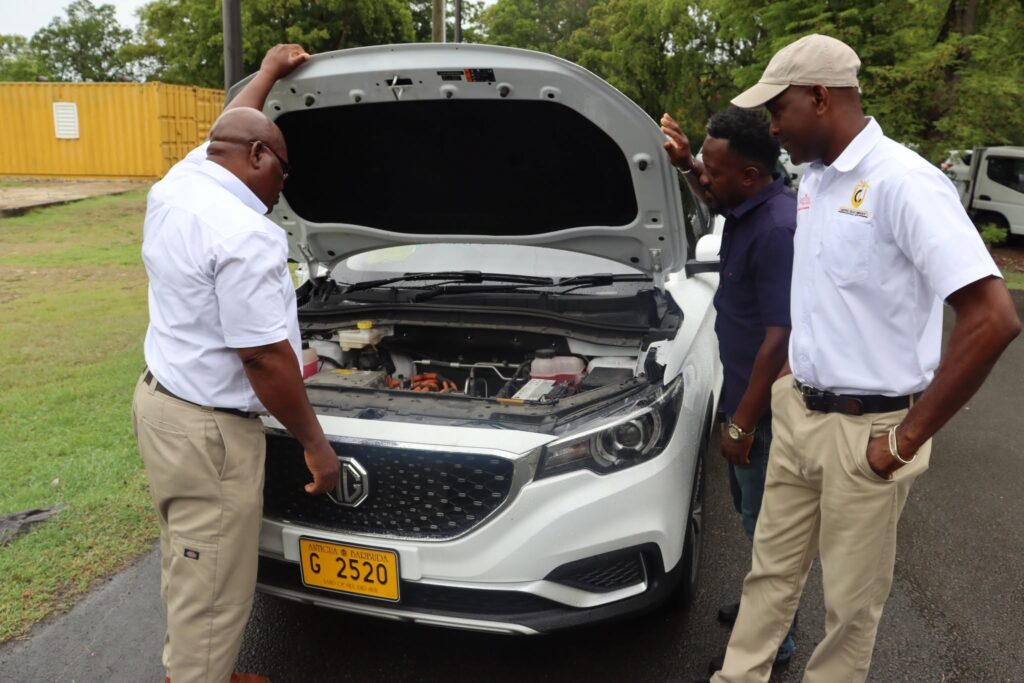
Background Antigua and Barbuda is advancing low-carbon and climate-resilient electric mobility initiatives. As these initiatives develop, the Department of Environment requires a practical report that helps explain how electric mobility may affect men and women in economically vulnerable communities within the national context. The assignment is intended to produce a useful, context-relevant report rather than a large-scale national study. The analysis should be proportionate to the available time and resources, make use of existing information where possible, and provide practical observations and recommendations. Purpose and Objective The objective of this assignment is to prepare a concise socio-economic and gender impact analysis establishing how low-carbon and climate-resilient electric mobility may affect men and women in economically vulnerable communities in Antigua and Barbuda. • Assess baseline socio-economic conditions, transport realities, and mobility-related constraints affecting economically vulnerable communities, using available data and limited additional inquiry where needed. • Examine how electric mobility may influence household economy, access, affordability, livelihoods, resilience, and local public health in a practical and context-sensitive way. • Ensure that findings, analysis, and recommendations are gender-disaggregated wherever data permits, with specific attention to differences affecting men and women. • Provide concise, practical recommendations relevant to project implementation and the national context. For more details please download the document below. Download Here
SLIM

National Adaptation Plan: Sectoral Adaptation Plan (SAP)

The National Adaptation Plan (NAP) The National Adaptation Plan (NAP) will serve as a roadmap for showcasing how Antigua and Barbuda’s actual and potential efforts to adjust to climate change. It includes Sectoral Adaptation Plans (SAPs), specifically for the(i) Wholesale and Retail;(ii) Tourism;(iii) Infrastructure and Housing;(iv) Food Security;(v) Finance;(vi) Culture and Historical Sites; and(vii) Water. Also contributing to the NAP are Local Area Adaptation Plans (LAAPs), which were developed for the City of St. John’s; the Airport/Fitches Creek Area; and the Area from Jolly Harbour to Johnsons Point. Stakeholders played a crucial role in shaping these plans, making decisions on the strategies and interventions required to effectively address climate change impacts. The NAP and its associated SAPs and LAAPs collectively provide a holistic approach to climate change adaptation in Antigua and Barbuda, guiding decision-making processes and promoting the resilience of key sectors/ areas in the face of climate challenges.
Environmental Impact Assessment (EIA) Report ARIADINE VILLA, Pearn’s Point

Environmental Impact Assessment (EIA) Report Ariadine Villa, Pearn’s Point Project Description The development involves a privately owned, three-storey luxury villa on Lots 32 and 33 (Parcel 41) within the Pearns Point master-planned community. The villa may be supplemented in the future with ancillary structures such as a spa, pool house, and guest suite. Vehicular access will be via internal estate roads connected to Jennings Main Road and Hermitage Road. Site Setting and Environmental Context The villa is sited on a prominent coastal headland within a low-density residential zone, featuring direct marine frontage. Recent storms have caused beach erosion and periodic inundation along the tombolo connecting the headland to Pearn Hill, emphasizing the need for resilient siting, coastal setbacks, and elevated finished floor levels. Preliminary geotechnical, topographic, and excavation surveys identified subsurface features, including a cave system beneath the headland. Infrastructure and Utilities The project will be serviced by a combination of on-site and national infrastructure systems: • Electricity: Supplied via the national grid through existing/planned utility corridors. • Water Supply: Groundwater abstraction supplemented by on-site reverse osmosis (RO) desalination, ensuring a reliable potable water source. • Wastewater Treatment: On-site system using a Kingspan Klargester Biodisc (RBC) with septic tank. • Effluent Management: Proposed reuse for irrigation or alternative disposal subject to regulatory approval. • Desalination (RO) System: The RO system will treat abstracted groundwater to potable standards. The process will generate a concentrated brine stream, which will require appropriate management to prevent adverse environmental impacts. Please download the full document below to review and provide feedback. Download Here
Environmental & Social Impact Assessment University of the West Indies Expansion Project (Phase 1)

Environmental & Social Impact Assessment University of the West Indies Expansion Project (Phase 1) Project Description The proposed UWIFIC Phase 1 expansion forms part of a 3-phased development to accommodate increasing student enrolment, which has grown from approximately 434 students (2021/2022) to over 1,100 in 2025, with projections of up to 5,000 students and 500 staff. Phase 1 covers approximately 13 acres and includes academic buildings, student housing, a sports complex, wastewater treatment plant, internal roadways, and approximately 127 parking spaces. The project is supported by an estimated US$80 million investment and establishes core infrastructure for future campus expansion. Site Location and Context The project is located within the Five Islands area on the southwestern peninsula of Antigua and lies within a mixed-use landscape of residential communities, coastal systems, and environmentally sensitive features, including Hanson’s Bay, adjacent wetlands, and the nearby Cooks Sanitary Landfill. Infrastructure and Utilities The project includes integrated infrastructure systems, including electrical supply (2 MVA for Phase 1, increasing to 5-6 MVA at full build-out), potable water supported by rainwater harvesting, on-site wastewater treatment using modular FBBR technology, and telecommunications infrastructure. Stormwater will be managed through engineered drainage networks and detention systems. Please download the full document below to review and provide feedback. Download Here
Consultancy to Support the Establishment and Operationalization of SIRF NGO Window Inbox

Background The Caribbean Biodiversity Fund seeks an individual consultant to support the SIRF Fund in Antigua and Barbuda with designing and operationalizing a dedicated NGO Window to channel CBF Endowment resources. The consultancy will develop CBF-compliant governance, legal, operational, grant-making, financial oversight, monitoring, and eligibility documentation, working closely with the SIRF Fund Secretariat, CBF, government counterparts, and civil society stakeholders. Expected Deliverables: Inception Report and detailed work plan. Governance and legal framework, including the NGO Window Operational Manual, grant-making policies and procedures, financial management and oversight framework, and monitoring, evaluation, and reporting framework aligned to CBF indicators. Terms of Reference for the NGO Window decision-making body. Consolidated CBF Eligibility Compliance Package, including minutes of at least three NGO Window Committee meetings. Final revised documentation and final report incorporating feedback from SIRF and CBF. Finalized governance framework, operational and grant manuals, compliance matrix, process summary, key decisions, recommendations, and a PowerPoint presentation for the Government of Antigua and Barbuda. Budget: The budget for execution is US$ 50,000.00 Minimum qualifications: Postgraduate degree in Governance, Public Administration, Environmental Management, Law, Finance, or a related discipline. Minimum of 7 years of demonstrated experience in conservation trust funds, governance reform, or institutional strengthening. Proven experience drafting operational manuals, governance frameworks, and grant-making procedures. Familiarity with the application of Conservation Trust Fund Practice Standards. Demonstrated experience working in Antigua and Barbuda on governance, environmental finance, public sector, NGO, trust fund, or institutional strengthening assignments. Experience working with public sector institutions in the Caribbean region. Excellent written and verbal communication skills in English. Management Skills: Governance reform and institutional strengthening. Stakeholder engagement and facilitation. Coordination with government, civil society, NGO, legal, institutional, SIRF, and CBF stakeholders. Development of work plans, consultation processes, compliance documentation, and final reporting. Technical Skills: Conservation trust fund governance and eligibility requirements. Drafting operational manuals, grant-making policies, fiduciary frameworks, and governance documentation. Financial management and oversight framework design. Monitoring, evaluation, reporting, and CBF indicator alignment. Compliance matrix preparation against CBF Eligibility requirements. Knowledge of international Conservation Trust Fund Practice Standards. Download Here
(EIA) Environmental Impact AssessmentSandals Grande Overwater Villas, Antigua

Environmental Impact Assessment Sandals Grande Overwater Villas Sandals Grande, Antigua, has submitted a proposal for the creation of over-water suites at their property on the North-Western side of the island of Antigua. This is part of a project to expand the offerings of the resort, through the construction of sixteen (13) overwater suites of varying sizes, which will be connected by a boardwalk supported on piles. The Department of Environment has requested an EIA to be conducted which focuses on the most seaward portion of the structure, as any construction in the area is likely to have a negative effect on the seagrass beds in this area. Please download document below to review and provide feedback. Download Here
Environmental Review and Public Consultation for the Barbuda Road Rehabilitation Project

Environmental Review and Public Consultation for the Barbuda Road Rehabilitation Project The Government of Antigua and Barbuda through the Ministry of Housing and Works has comissioned the following documents, for Civil Works Design and Construction Supervision of River Road, Codrington Wharf Area and Other Areas in Barbuda under the Rehabilitation and Reconstruction Loan (Hurricane Irma Project). The general public is invited to review and comment on: Inception Report Consultancy Services for Civil Works Design and Construction Supervision Inception Report – Social and Gender Sensitisation Corridor Characterisation and Ranking Report Environmental and Social Management Plan (ESMP)
Request for Proposal – Socio-Economic & Gender Impact Analysis of Low-Carbon and Climate-Resilient Electric Mobility

Background Antigua and Barbuda is advancing low-carbon and climate-resilient electric mobility initiatives. As these initiatives develop, the Department of Environment requires a practical report that helps explain how electric mobility may affect men and women in economically vulnerable communities within the national context. The assignment is intended to produce a useful, context-relevant report rather than a large-scale national study. The analysis should be proportionate to the available time and resources, make use of existing information where possible, and provide practical observations and recommendations Purpose and Objective The objective of this assignment is to prepare a concise socio-economic and gender impact analysis establishing how low-carbon and climate-resilient electric mobility may affect men and women in economically vulnerable communities in Antigua and Barbuda. – Assess baseline socio-economic conditions, transport realities, and mobility-related constraints affecting economically vulnerable communities, using available data and limited additional inquiry where needed. – Examine how electric mobility may influence household economy, access, affordability, livelihoods, resilience, and local public health in a practical and context-sensitive way. – Ensure that findings, analysis, and recommendations are gender-disaggregated wherever data permits, with specific attention to differences affecting men and women. – Provide concise, practical recommendations relevant to project implementation and the national context. Please download the full Document for Submission details. Deadline June 30th Download Here